English
 Hindi

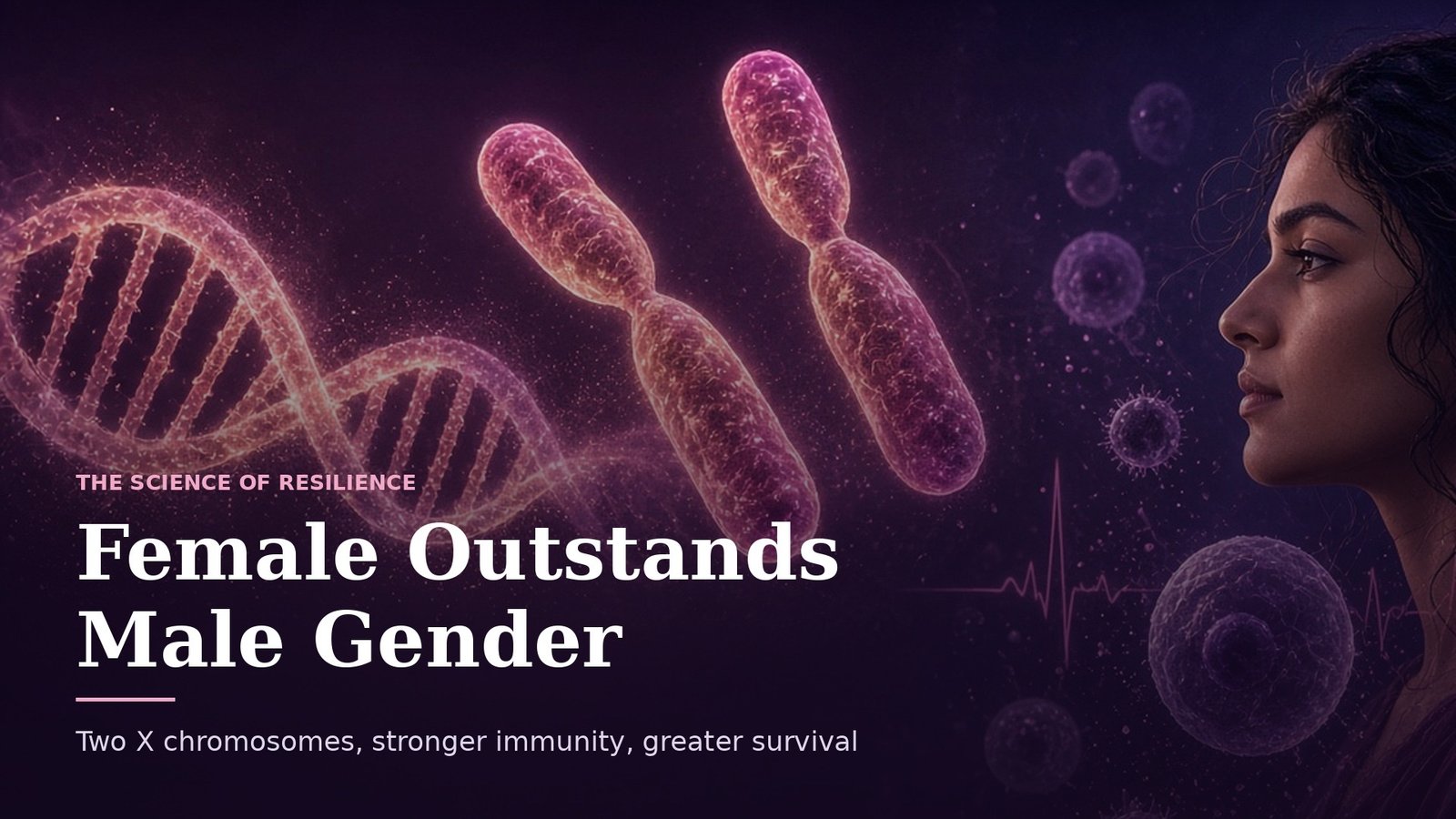
The scientific research around biological
differences between sexes reveals distinct evolutionary, genetic, and
physiological advantages to the females.
When analysing endurance (physical/survival
resilience) and emotional processing, geneticists and biologists have uncovered
compelling evidence showing that the female blueprint provides substantial
baseline advantages.
When it comes to baseline biological
resilience, long-term survival, and ultra-endurance energy efficiency, genetic
females possess distinct advantages primarily rooted in having two X
chromosomes.
Head Start Since Inception
More male zygotes are conceived, but male
embryos and fetuses face a significantly higher risk of miscarriage and
stillbirth, showing that female embryos survive adverse conditions at higher
rates.
Higher resilience: Female fetuses
demonstrate greater resistance to prenatal environmental stressors like
malnutrition, heat, and illness.
Better Immunity
Because females have two copies of X chromosome,
they benefit from a more robust, versatile immune system. This allows women to
fight off viral infections, bacteria, and cancers far more efficiently than
men. Estrogen hormone gives women stronger immune response.
Wherever it comes from, women seem to be
shielded against sickness later on. “Cardiovascular disease occurs much earlier
in men than women. The age of onset of hypertension [high blood pressure] also
occurs much earlier in men than women,” says Prof Kathryn Sandberg, Director of
the Center for the Study of Sex Differences in Health, Aging and Disease at
Georgetown University.
Even when it comes to everyday coughs and
colds, women have the advantage. “If you look across all the different types of
infections, women have a more robust immune response,” adds Sandberg. “If
there’s a really bad infection, they survive better.”
Childhood Diseases
Attention-Deficit Hyperactivity Disorder
(ADHD) Autism Spectrum Disorders, Tourette Syndrome and Conduct Disorder are
all 2-4 times more common in males. Learning disorders are more commonly
diagnosed in males than females.
The "Backup" Chromosome (XX vs. XY)
The X chromosome is large and contains over
1,000 genes, many of which govern brain function, cell repair, and immunity.
The Y chromosome, by comparison, carries only about 70 genes. Because females
have two X chromosomes, they possess a built-in genetic redundancy: if one gene
is damaged, another gene can perform the function.
Males (XY) have no backup; if a gene on
their single X chromosome is flawed, it will express itself, making males more
vulnerable to a wide array of developmental, genetic, and life-threatening
conditions.
Muscle Strength and Endurance
Men are physically stronger than women;
high levels of testosterone help men recover faster from resistance training.
Muscle Fibre Composition: Women naturally
possess a higher percentage of Type I (slow-twitch) muscle fibres, which are
highly resistant to fatigue and optimised for sustained, long-term athletic
output.
Fat Oxidation: Estrogen promotes better fat
metabolism. During extreme physical exertion, women's bodies are highly
efficient at converting stored fat into consistent energy, preserving glycogen
stores longer than men.
Longevity
When it comes to longevity women live
longer than men surviving illness and coping with trauma, one gender comes out
on top. Angela Saini meets the scientists working out why. Globally, a million
babies die on the day of their birth every year. But if they receive exactly
the same level of care, males are at greater risk than females. What makes baby
girls so robust remains mostly a mystery. For reasons unknown, girls may be
getting an extra dose of survivability in the womb.
Emotional Intelligence
Structurally, some studies observe that
females have larger gray matter volumes in areas linked to compassion and
understanding the feelings of others.
Women consistently score higher on
cognitive empathy (the ability to read and understand someone else’s emotional
state), women have an edge over men for emotional quotient.
This indicates that the female advantage in
emotional intelligence is largely driven by a combination of the prenatal
hormonal environment (higher exposure to estrogen and oxytocin, which foster
social bonding) and socialisation (cultural norms that permit and encourage
women to express, navigate, and discuss feelings openly).
Conclusion
With the biological edge over the male
gender, if equal opportunities in education and employment are given, the
females have the potential to outshine the males. The present trend is
revealing the same. They are surpassing the other gender in academic results in
schools, colleges and universities though they have a small window of
opportunity.